

Most people believe that the abrasion resistance of polyurethane screens is only related to the material's hardness. However, the reality is far more complex. Why do some factories need to replace expensive, mass-produced screens after only a short period of use, while others use the same screens for years? The main reason for this difference is that most buyers overlook four material factors related to the screen.
Material Hardness Affects the Abrasion Resistance of Polyurethane Screens
Increasing the Shore hardness from 80A to 95A does indeed enhance abrasion resistance. However, the problem is that high-hardness polyurethane loses its elastic resilience, weakening the screen's self-cleaning effect. For most fine particle screening applications, a hardness of 85A to 90A is optimal—strong enough to resist abrasion without compromising self-cleaning and causing screen clogging.
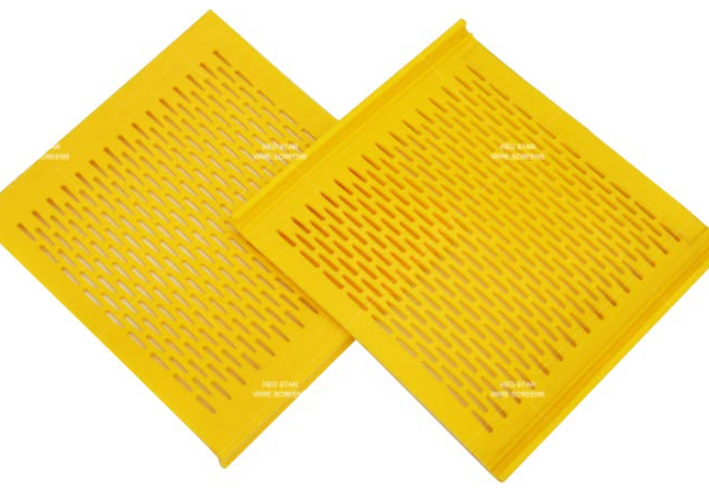
Base Resin Type: The Influence of MDI vs. TDI, Polyether vs Polyester
This is crucial. MDI-based polyurethanes outperform TDI-based ones in hydrolysis resistance, which is especially critical for screening equipment operating in all weather conditions with wet processes. Polyether backbones are more resistant to humid environments than polyester, which is more prone to degradation in slurry environments. If your dewatering or grading processes are carried out in a wet process, then polyurethane screens made from a combination of MDI and polyether materials are most suitable.
Fillers and Reinforcing Agents Affect the Abrasion Resistance of Polyurethane Screens
Pure polyurethane screens have limitations. Adding ceramic microparticles, carbon fibers, or nano-silica can improve abrasion resistance by 40% to 60% without sacrificing flexibility. Currently, some manufacturers use mixed fillers, such as ceramics, to increase the screen's hardness, and add carbon fibers to enhance the polyurethane screen's toughness. During screen manufacturing, too much filler will make the surface brittle; too little filler will lead to wear blocks. The key is to strike a balance.
The Impact of Crosslinking Density on the Abrasion Resistance of Polyurethane Screens
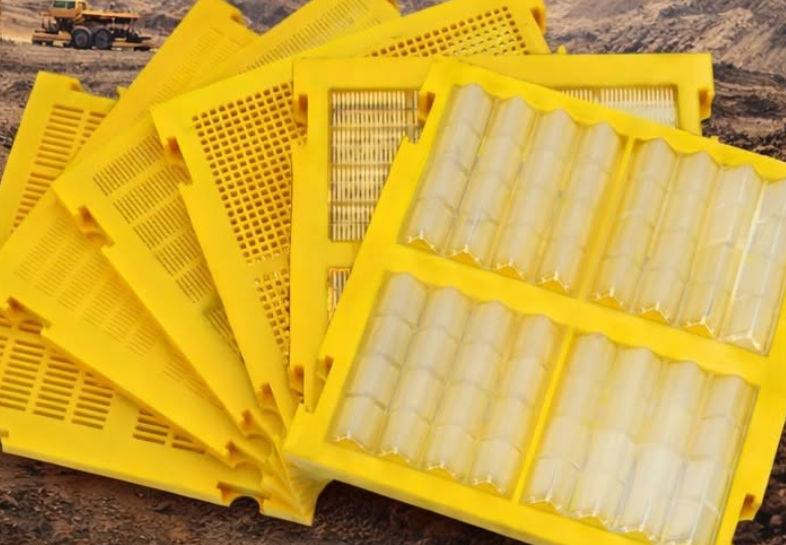
This is the hidden killer. Higher crosslinking density means better corrosion and abrasion resistance for polyurethane screens, but correspondingly, elasticity will decrease. Screens with optimized crosslinking typically have a longer service life than those made with standard formulations, while still maintaining self-cleaning properties.
Therefore, the wear resistance of polyurethane screens cannot be judged solely by hardness. True wear resistance depends on the resin chemical composition, filler strategy, and cross-linking design. Considering all four factors when purchasing will ensure your screens have a longer lifespan and perform better during screening operations.
Leave a Message