

If you’ve ever stood beside a wet season mining screening deck, watching 80% of your apertures clog solid with thick sticky clay-rich ore that turns into a dense paste when it hits even a small amount of rain, forcing your whole circuit to run at 30% of its rated tonnage while your crew scrapes caked material off the panels for hours, you know how much blinding can tank your monthly production targets and blow your consumable budget. Many mining operations supervisors I’ve worked alongside over the years shared that they tried every anti-blinding accessory and screen media on the market for years, with almost no meaningful improvement, until they switched to a purpose-built flat-top woven screen for sticky ore. This practical, field-tested guide skips generic marketing claims and breaks down exactly how this specialized screen design eliminates the most stubborn blinding problems that plague sites processing high-moisture sticky clay, laterite or weathered ore.
Zero-Ledge Smooth Surface Eliminates Particle Wedging Points
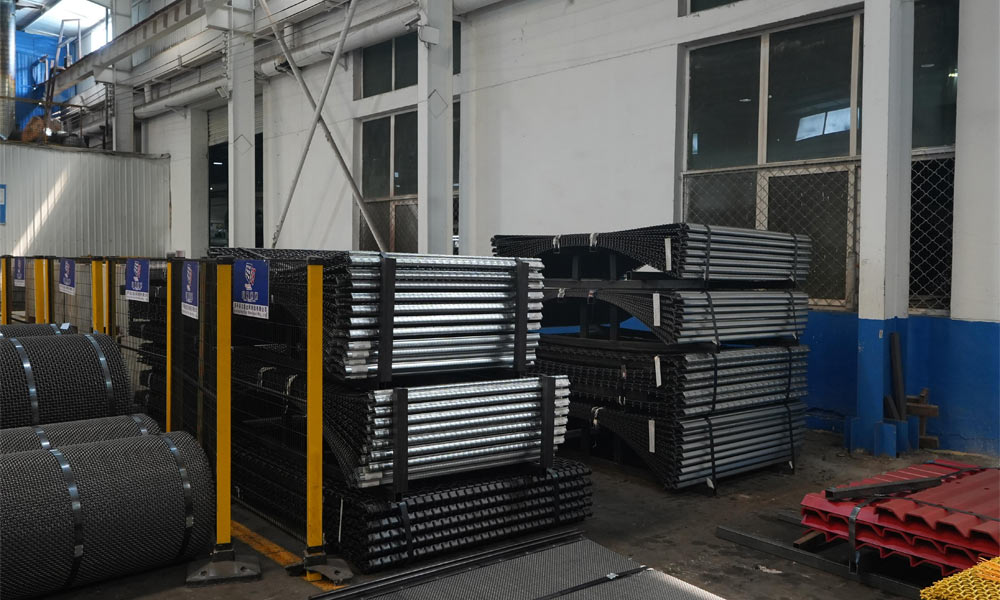
The first core design advantage that drastically cuts blinding rates is the completely polished, level top surface of a purpose-built flat-top woven screen for sticky ore, which removes every tiny hidden crevice, ridge and crimp peak that soft wet sticky particles normally wedge themselves into. Standard ridged crimped woven screens and textured rubber panels have thousands of tiny uneven gaps around every aperture edge, where soft wet clay can get pressed in and harden into a solid permanent plug that is almost impossible to dislodge even with heavy vibration. The flat-top’s post-weaving precision grinding process levels every single wire intersection completely flush with the rest of the mesh, creating a perfectly even unbroken surface that gives sticky wet particles no uneven spot to catch on, so they slide smoothly across the mesh instead of sticking to the panel surface. Most operations that made this switch reported that their initial blinding rate dropped by 70% immediately, even when processing sticky laterite ore with 18%+ natural moisture content.
Sharp Zero-Taper Apertures Prevent Permanent Pegging
The second critical design feature that stops hard near-size particles from locking into openings permanently is the perfectly straight, zero-taper square aperture geometry of a purpose-built flat-top woven screen for sticky ore, which has no inward narrowing shape that can trap soft wet pegging particles. Most standard polyurethane and rubber anti-blinding screens use tapered hourglass shaped openings that are wider on the top and narrower in the middle, which lets wet sticky near-size particles sink deep into the narrowest middle section and lock in place completely, creating a permanent peg that blocks the entire aperture. The flat-top’s sharp-edged straight-sided apertures have no narrow middle section at all, so any near-size particle that gets pushed partway into the opening can easily fall back out under normal vibration, instead of getting wedged permanently into place. Most mining sites that tested this design found that the number of permanently pegged apertures across a full 12-hour wet shift dropped from more than 40% down to less than 5%.
Optimized High Open Area Maintains Effective Throughput in Wet Conditions
The third huge operational benefit that keeps your circuit running at close to full tonnage even during multi-day rainy stretches is the industry-leading 45% to 50% total open area of a purpose-built flat-top woven screen for sticky ore, which delivers far more empty aperture space than standard rubber or polyurethane screens. Most heavy-duty anti-blinding rubber panels only have 25% to 30% maximum open area, so even a small amount of blinding can drop their effective open area down to less than 15%, which makes it impossible to push any meaningful tonnage through the deck. The flat-top’s high open area means even if 10% of apertures get temporarily blocked, you still have more effective open space left than a brand new standard rubber panel, so you can keep processing material at 80%+ of your normal dry tonnage even in the wettest, stickiest conditions. Most operations that made this switch reported that their wet season average hourly throughput jumped by 40% compared to their old rubber screen setup.
 Compatible Non-Damaging Anti-Blinding Accessories Boost Performance
Further
The final easy optimization that pushes your blinding resistance even higher is the fact that a purpose-built flat-top woven screen for sticky ore works perfectly with soft non-abrasive anti-blinding accessories that will not scratch or damage its smooth level surface. Hard metal bouncing balls and sharp rubber cubes that many sites use on standard crimped screens will scratch and dent the flat-top’s polished surface, creating rough spots that actually make blinding worse over time, but soft food-grade silicone bouncing balls installed in the undersize discharge hopper under the deck bounce up and tap the underside of the mesh every time the deck vibrates, knocking any semi-stuck particles loose from below without leaving any scratches. You can also add lightweight soft rubber flap curtains hanging 1 meter above the feed end of the deck, which drag lightly across the top of the material bed to break up thick wet mud clumps before they can settle down onto the mesh. Most operations that added these two simple low-cost accessories reported that their total blinding rate dropped below 3% across full 24-hour wet operation cycles.
For mining operations that regularly process high-moisture sticky clay, laterite or weathered ore and battle constant blinding that kills throughput and forces hours of manual cleaning work, a purpose-built flat-top woven screen for sticky ore eliminates almost all of these persistent pain points, delivering a full return on your initial investment in less than 12 days of peak wet season production operation.
Leave a Message