

If you’ve ever pulled a screen mat off your flip flow deck after barely two weeks of operation, torn completely through at the feed impact zone or stiffened up so badly it can no longer flex to shake loose sticky clay, you know exactly how frustrating it is to throw away a partially used panel far earlier than its advertised service life, wasting money and forcing unplanned shutdowns that derail your whole production schedule. After years of chatting with maintenance leads across coal washing plants, mineral processing sites and aggregate quarries across northern China, nearly every single one shared that they used to burn through mats every 2-3 weeks, until they learned how to judge the real wear status instead of replacing panels blindly on a fixed calendar schedule, and followed simple small daily routines that extended mat life by 2 to 3 times. This no-fluff field-tested guide breaks down how to set a realistic replacement cycle for your site and simple actionable maintenance tips to get the maximum possible runtime out of every set of Polyurethane Flip Flop Screen Mats, no empty marketing buzzwords, just insights pulled straight from hundreds of real on-site operational logs.
Base Replacement Cycle on Real Wear Threshold, Not Fixed Calendar Schedules
The first most important rule to set a realistic cost-effective replacement cycle is to never replace your Polyurethane Flip Flop Screen Mats on a rigid fixed calendar schedule that ignores your actual feed properties, throughput and material abrasiveness, because a mat that processes sharp high-silica granite fines will wear out far faster than one running soft low-abrasion limestone. The correct way to judge when a mat needs replacement is to track three simple on-site metrics: remaining PU thickness at the high-wear feed zone, the percentage of apertures that are worn oversized beyond your final product tolerance, and the elasticity of the PU material when you press down on it. When the remaining PU thickness drops to 30% of its original new thickness, or more than 5% of apertures are worn too big, or the material has stiffened up completely and no longer bounces back when pressed, that is the exact time to replace it, no earlier and no later. Granite quarries that switched to this wear-based replacement rule instead of a fixed monthly schedule cut their total annual mat spare parts cost by more than 35%, no drop in screening quality at all.
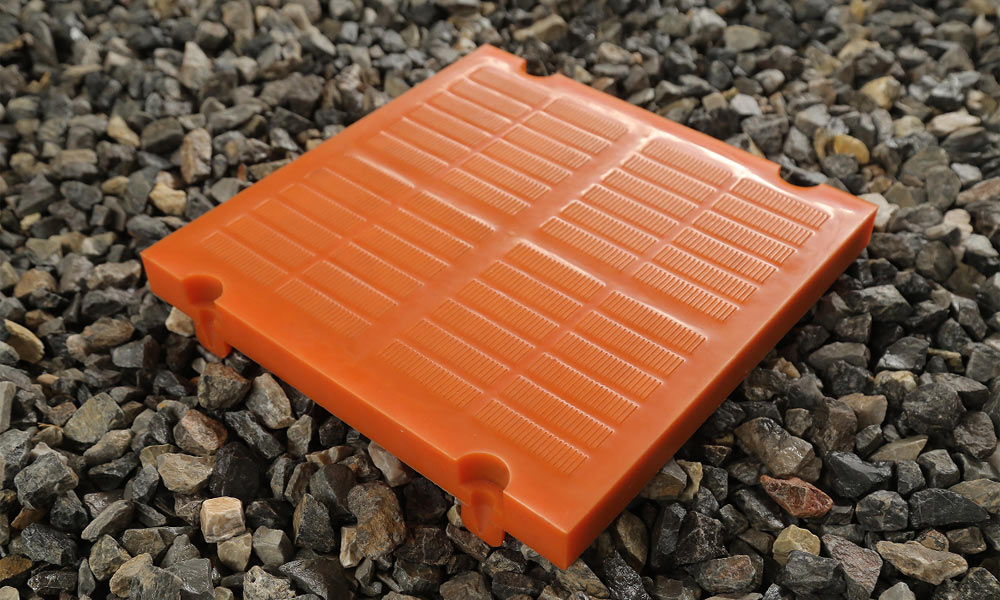
Add a Thick PU Impact Liner Above the Feed Zone to Stop Localized Scour
The quickest way to stretch out the service life of every Polyurethane Flip Flop Screen Mat is simple—just add a 20mm thick custom PU impact liner above the high-wear feed zone. It’s a cheap and easy upgrade, but it really pays off. Here’s why: without that liner, heavy chunks of raw material—sharp rocks, wet lumps of coal, or hard ore—smash straight into the same small 300mm section of the mat over and over. All that pounding wears right through that spot way before the rest of the mat even shows signs of age. You end up tossing out the whole screen even though most of it’s still good.With the thick PU impact liner in place, the initial big hits get absorbed, and the flow of material spreads out evenly across the whole deck. That means one little spot doesn’t take all the abuse, and the mat lasts a lot longer. Plants handling sharp, high-silica coal have seen a real difference—localized wear right under the feed zone dropped over 70%, and total average mat life jumped by nearly 40%. Not bad for such an easy fix.
Weekly 10-Minute Tension and Deck Rail Inspection Eliminates Hidden Tear Risks
The second simple routine maintenance step that prevents 80% of unexpected premature mat failures is doing a 10-minute weekly inspection of all mat tension hooks and deck support rails, to catch loose tension or bent rails before they create concentrated stress points that tear your Polyurethane Flip Flop Screen Mats apart. Over weeks of continuous high-frequency vibration, individual tension hooks can loosen slightly, making that section of the mat sag down and rub against the deck frame until it wears a hole through the bottom of the PU material, while bent or misaligned support rails create uneven pressure spots that make the mat tear under repeated flip flow motion. Catching these small issues early and retightening hooks or tapping bent rails back into alignment takes barely any time, but stops the mat from getting damaged long before it shows visible signs of surface wear. Mineral processing sites that stuck to this weekly inspection routine reported that unexpected mid-shift mat tear-out failures almost completely disappeared, and average mat service life increased by nearly 30%.
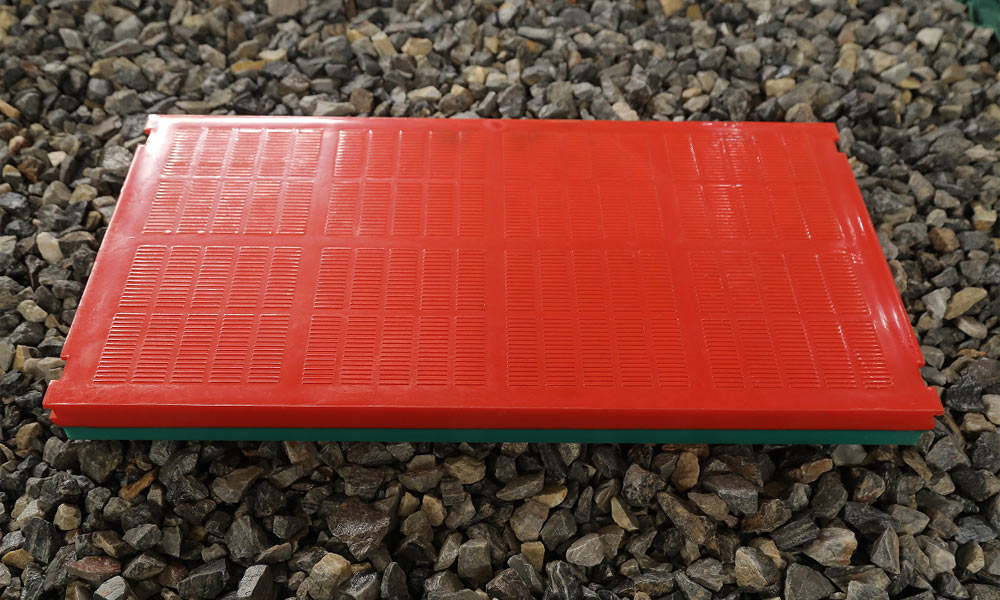 Flush Deck With Low-Pressure Warm Water During Long Off-Shift Breaks
The final easy daily practice that prevents hidden long-term PU material degradation is flushing the full deck surface of your Polyurethane Flip Flop Screen Mats with low-pressure warm water during every long scheduled off-shift break, to wash away small sticky clay or mineral fines that get stuck in tiny micro-grooves on the PU surface and slowly abrade the material over time. If you leave these sharp fine particles caked onto the mat surface for days on end, they act like fine sandpaper that scours away the smooth non-stick PU top layer every time the mat flexes, gradually wearing the material thin and making it lose its elasticity far earlier than it should. Using low-pressure warm water instead of high-pressure cold water avoids damaging the PU material with sharp high-velocity jets, while still washing away all trapped fine particles completely. Clay processing yards that added this simple 5-minute daily flush step found that their mats kept their full flexible bounce for far longer, and total usable service life extended by more than 25%.
By setting a wear-based replacement cycle tailored to your site’s unique feed properties, adding a low-cost feed zone impact liner, doing quick weekly tension and rail checks, and flushing the deck with warm water during breaks, you can easily double the total service life of every polyurethane flip flop screen mat you install, drastically cutting your total annual spare parts cost and unplanned downtime.
Leave a Message