

Fine particle separation is where screening stops being a straightforward sizing exercise and starts becoming a precision operation, because the smaller the cut point, the less tolerance there is for variation in aperture, media movement, or feed conditions. A mill that needs to hold a tight specification on a fine product cannot afford media that drifts out of tolerance or blinds under load, and that is exactly the gap that fine aperture screen panels are designed to fill. These panels are built around the idea that at small openings, consistency matters more than raw open area, and the design choices that follow from that principle are quite different from those used in coarser duty. This article looks at what makes fine aperture screening difficult, how panel design responds to it, and what plants should consider when specifying and running this type of media.
Why Fine Particle Separation Places Different Demands On Screen Media
As the cut point drops, the margin for error shrinks in every direction at once, and the behaviour of the deck changes in ways that are not always obvious from the specification sheet. A Fine Aperture Screen Panels specification has to account for the fact that at small openings, a tiny change in aperture dimension represents a much larger proportional change in the cut point, so manufacturing tolerance becomes a performance issue rather than a quality detail. Fine particles are also more affected by moisture and surface forces, which means blinding risk rises sharply as aperture size falls, and the bed behaves differently because fine material fluidises more readily and can pass across the deck faster than the screening action can keep up with. Wear at the aperture edge is another factor, since a small amount of edge rounding that would be irrelevant on a coarse panel can shift the effective cut point noticeably on a fine one.
Aperture Precision And Consistency In Panel Manufacture
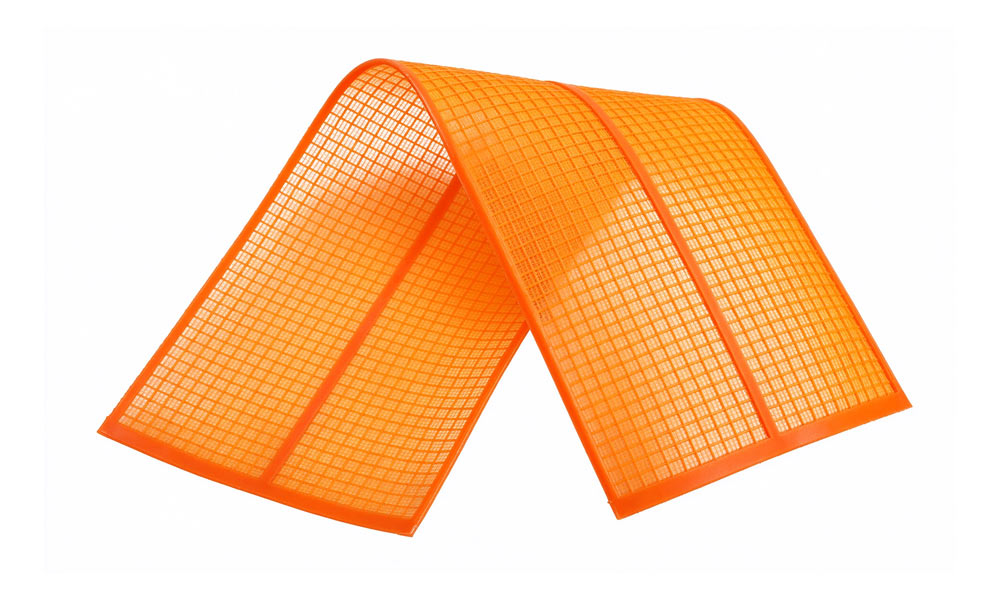
The defining characteristic of good fine aperture media is that every opening is the same, and that this remains true across the whole panel and from one panel to the next. A Fine Aperture Screen Panels manufacturer achieves this through moulded construction rather than fabricated media, because moulding holds aperture dimensions to a much tighter tolerance than weaving or punching can manage at small sizes. The aperture profile is usually tapered to reduce wedging, and the surface finish is controlled to minimise adhesion, both of which matter more at fine cut points than they do in coarser duty. Consistency between panels is equally important, because a deck made up of panels with slightly different apertures will produce a product with a broader size distribution than the specification allows, and that variation can be difficult to trace once the material has left the screen. This is why reputable manufacturers control the moulding process closely and why buyers should ask about tolerance rather than assuming it.
Matching Panel Design To The Separation Duty
Fine aperture panels are not a single product, and the right design depends on what the plant is trying to achieve and what it is feeding the deck. A Fine Aperture Screen Panels selection should consider the target cut point, the feed size distribution, the moisture content, and whether the duty is a straightforward separation or a dewatering step that also removes fines. Slot apertures are common in fine duty because they offer a good balance between open area and structural strength, and the orientation of the slots relative to flow affects both capacity and cut point. Panel thickness and compound hardness are also variables, since a thinner panel gives more open area but less wear life, and a harder compound resists abrasion better but can be more prone to blinding in wet duty. The practical approach is to define the separation requirement first and then select the panel that meets it, rather than starting from a standard product and hoping it fits.
Installation, Operation And Maintaining Cut Point Accuracy
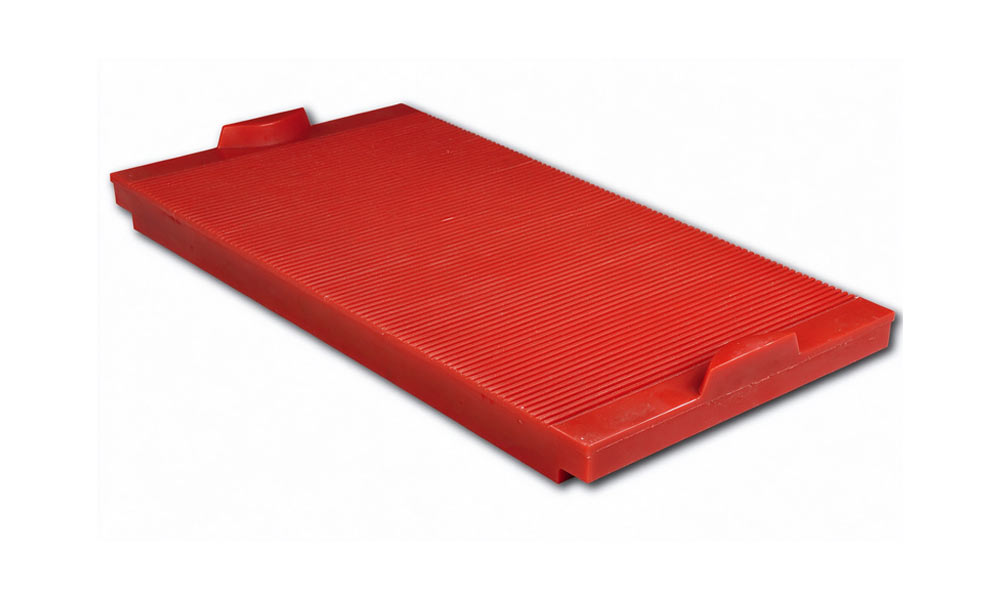
Once a fine aperture panel is installed, the priority shifts to keeping the cut point where it was set, because small changes in operating conditions can move it without any obvious warning. A Fine Aperture Screen Panels installation should be checked for even support and correct tension or clamping, since uneven support causes localised movement that accelerates wear and can distort the panel. Stroke and frequency should be set to suit the fine feed, because too little motion allows the bed to sit and blind while too much throws material past the apertures without giving it a chance to pass. Regular inspection should focus on aperture condition rather than just visible damage, since edge wear and partial blinding both affect the cut point before they become obvious to the eye. Keeping records of product size analysis alongside panel age gives a clear picture of when performance is drifting and when replacement is due.
Fine aperture screen panels are the point where screening becomes a precision process, and the plants that treat them that way are the ones that hold their product specification consistently. Moulded construction, tight aperture tolerance, and a design matched to the actual separation duty are what separate a panel that performs from one that merely fits the frame. They demand more attention in installation and operation than coarser media, and they reward that attention with stable cut points and predictable product quality. In mineral processing, where a small shift in fines content can affect downstream recovery or product value, that stability is worth far more than the difference in panel price.
Leave a Message