

As any user of screening equipment will be aware, there comes a point where even the highest quality Anti-Clogging vibrating screen media needs replacing. In the case of a standard Vibration Screen, the true 'cost' of this operation far exceeds the price of the screen panels. It involves considerable time lost to the maintenance function removing existing screens, tensioning new ones and overcoming corroded fixings and clamped assemblies. By incorporating a Quick Frame into the design of an Anti-Clogging Vibration Screen, all of these issues are overcome and the benefits of using Anti-Clogging Screen Media can be achieved alongside dramatically reduced screen changing times. The impact this has on increasing the time your plant is available for production cannot be overstated. In this paper we look at the reasons why conventional screens take such a long time to change screen panels, demonstrate how the Quick Frame maintains the properties of the Anti-Clogging screen media and significantly reduces time required to complete this job, and finally consider what changes users may need to make to their current practice.
Why Conventional Screen Panel Replacement Drains So Much Downtime
Conventional screen panel replacement drains so much downtime because an Anti-Clogging Vibrating Screen with a quick frame solves a problem that most plants have accepted as unavoidable for decades. On a traditional deck, each mesh panel is tensioned individually with dozens of bolts, clamps, and tension rails that seize up, rust over, and get buried under layers of accumulated fines and damp slurry residue. The maintenance team has to bring in grinders, impact wrenches, and pry bars just to get the old panel free, and then they have to spend extra hours adjusting tension across every single wire to make sure the new panel does not sag, fret, or fail prematurely. What should be a 30 minute job regularly stretches into a full shift of downtime, and that lost production time costs the plant far more than the price of the new screen media.
How The Integrated Quick Frame Preserves Full Anti-Clogging Performance
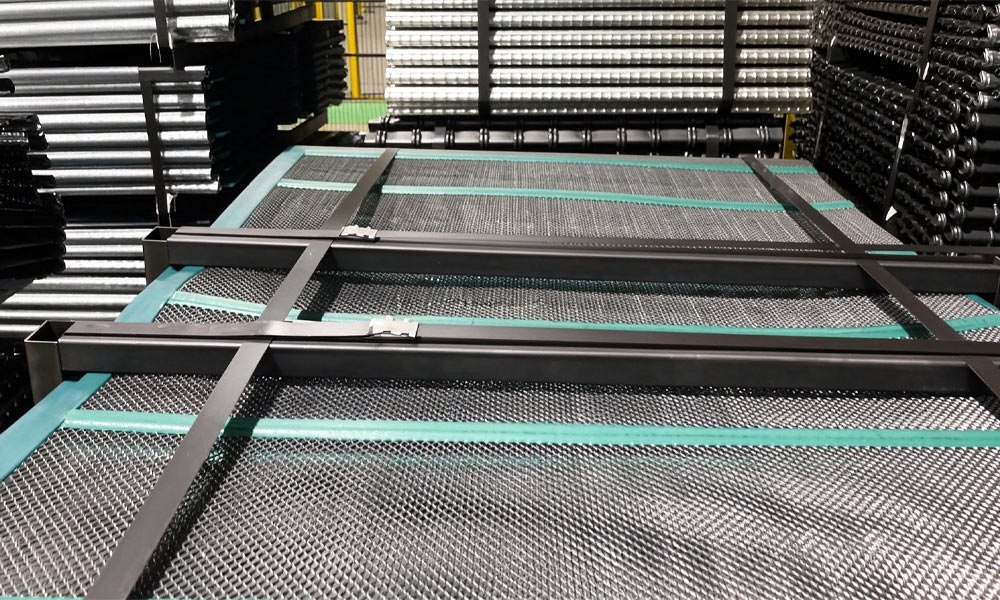
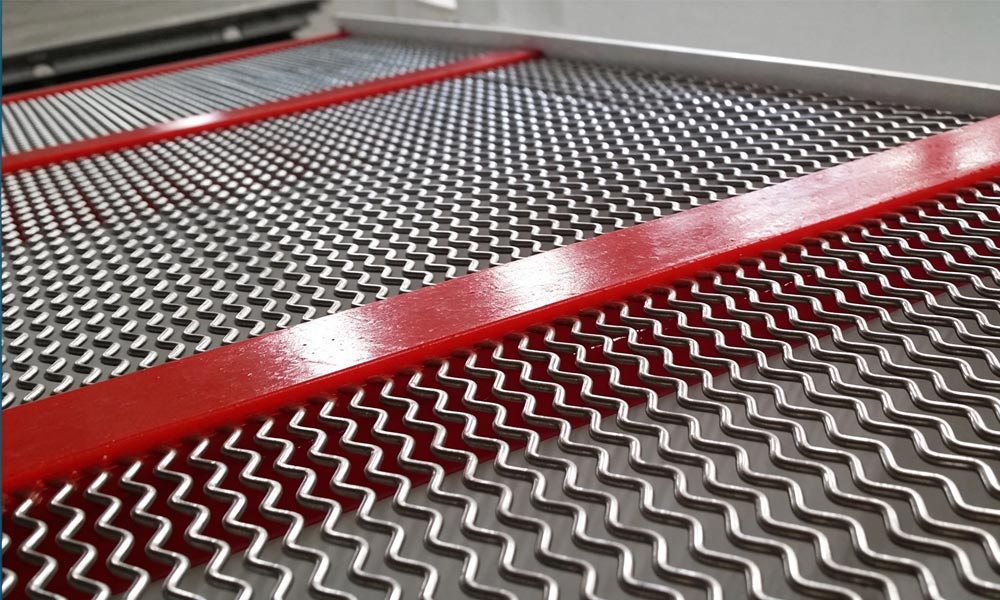
The integrated quick frame preserves full anti-clogging performance because an Anti-Clogging Vibrating Screen does not treat the frame as an afterthought that gets bolted onto the media at the end of the manufacturing process. The anti-clogging profiled wires are pre-mounted and pre-tensioned inside a rigid, dimensionally stable modular frame at the factory, so every single wire is set to exactly the correct tension that lets it flex and self-clear without sagging or going slack. The frame itself is shaped to sit flush against the deck's support bars, so there are no gaps, no uneven contact points, and no sharp edges that would damage the anti-clogging wires or create dead zones where blinding can start. Unlike a field-tensioned conventional panel where tension is always inconsistent across the surface, every modular panel comes off the line with perfectly uniform tension that is optimized for maximum anti-clogging action.
How The Quick Release Mount Cuts Media Change Downtime Dramatically
The quick release mount cuts media change downtime dramatically because an Anti-Clogging Vibrating Screen with this design eliminates almost every slow, frustrating step of a conventional panel swap. There are no individual tension bolts to loosen, no seized clamps to grind off, and no hours of manual tension adjustment once the new panel is in place. The old modular panel can be lifted straight out of the deck in seconds, the new pre-tensioned frame drops into the locating slots, and a small number of large, easy-to-operate quick-lock clamps secure the whole panel firmly in position. A two-person maintenance team can swap out every panel on a full screening deck in less than an hour, compared to the four to six hours that the same job would take on a conventionally tensioned deck. This means the plant can complete a full media change between shifts, instead of losing a full day of scheduled production.
Aligning Maintenance Workflows To Maximize Long-Term Value
Aligning maintenance workflows to maximize long-term value is the final step, because an Anti-Clogging Vibrating Screen with a quick frame will only deliver its full benefit if the plant adjusts its old maintenance habits to match the new design. Teams no longer need to keep a full stock of spare tension rails, bolts, and specialized tensioning tools on hand, and they can instead keep a small inventory of pre-built modular panels sized for their most frequently used apertures. Because panel swaps are so fast, the plant no longer needs to wait until the entire deck is almost completely worn out to schedule a change-out, they can swap individual worn panels during short routine stops instead of running a partially failed deck that drags down performance. This small shift in workflow turns screening maintenance from a major disruptive event into a fast, low-impact task that never interrupts production.
 The combination of anti-clogging screening performance and a quick
replacement frame structure solves two of the biggest pain points that
processing plants face with their vibrating screens, and anti-clogging vibrating
screen units built with this design deliver far more value than just a simple
improvement in blinding resistance. The pre-tensioned modular frame preserves
perfect anti-clogging performance across the full panel surface, cuts media
change downtime from multiple hours down to minutes, and lets maintenance teams
adjust their workflows to keep the deck running at peak efficiency far more
consistently. This design is not a mandatory upgrade for every small screening
circuit, and very small batch operations that only change media once a year may
not see the full benefit, but for any continuous processing plant that values
uptime and easy maintenance, this combination of anti-clogging performance and
quick-swap structure is one of the most impactful upgrades they can make to
their screening circuit.
Leave a Message