

Most people assume stainless steel screens are the default choice for tough environments. In arid, high-abrasion conditions, that assumption costs money. Let's break down why 65Mn spring steel screens often outperform them and where stainless still makes sense.
The Testing Ground Nobody Talks About
Arid mining sites in places like Western Australia, the Atacama, or the Saudi deserts throw a specific combination at your screens: extreme dryness, dust-laden air, and ore that's basically sandpaper with edges. Moisture isn't there to help lubricate the surface, so every particle grinds raw against the wire. This is where the real difference between 65Mn spring steel screens and stainless steel screens shows up.
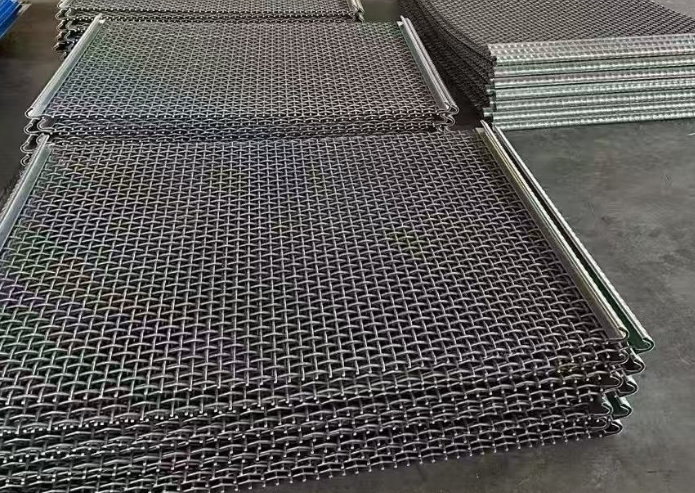
Where 65Mn Spring Steel Screens Pull Ahead
65Mn has a naturally high carbon content around 0.62–0.70%, which gives it a hardness level that stainless steel just can't match in this context. Spring steel's elastic modulus means it flexes under impact instead of cracking — a huge deal when large dry chunks hit the screen at speed. In high-abrasion arid conditions, 65Mn spring steel screens lose material slower, maintain aperture consistency longer, and handle shock loads that would permanently deform thinner stainless panels. Operators in iron ore and copper operations report 30–50% longer panel life with 65Mn in these exact conditions.
The Unique Advantages of Stainless Steel Mesh
Look, stainless isn't useless here. If your operation involves any moisture, corrosive chemicals, or fine sticky material, stainless steel screens beat 65Mn hands down. Corrosion resistance is stainless's entire identity, and in humid or chemically aggressive environments, 65Mn will rust and degrade faster. But in truly arid, dry, abrasive setups? Stainless pays a premium for a property of corrosion resistance that you don't even need.
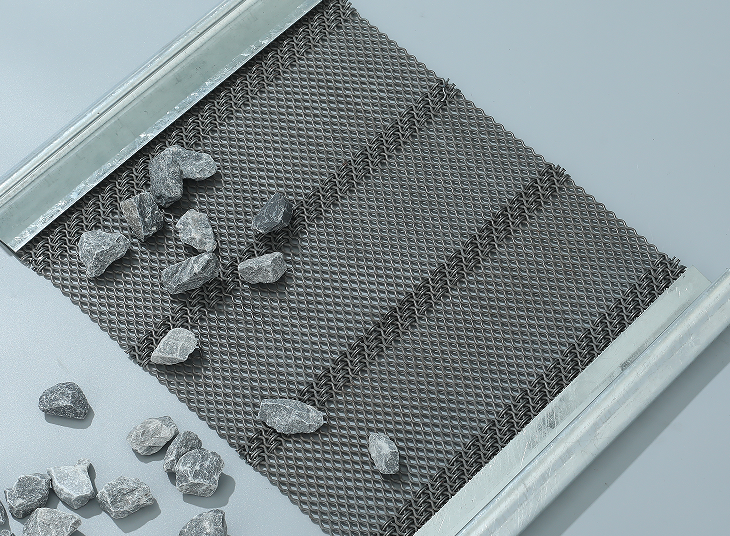
Cost Analysis of 65Mn Spring Steel and Stainless Steel Screens
Here's the part procurement teams care about. 65Mn spring steel screens cost roughly 40–60% less than equivalent stainless steel screens. In arid high-abrasion mining, you get better wear performance at a lower price. That's not a trade-off,that's a win. Stainless only justifies its cost when corrosion is the actual enemy, not abrasion.
If your site is dry, dusty, and abrasive,go with 65Mn spring steel screens. They're harder, tougher, cheaper, and built for exactly this punishment. Save stainless steel screens for wet or corrosive applications where it earns its keep.
Leave a Message