

Many factory buyers have complained that they randomly chose a screen, only to find it worn through and clogged within a week, forcing the entire production line to shut down for replacements and resulting in significant lost time. Choosing the right mining screen type isn't that complicated. Understanding the characteristics of polyurethane, metal wire mesh, and rubber screens is half the battle won. Polyurethane screens are highly elastic, clog-resistant, and wear-resistant; metal wire mesh is rigid and impact-resistant; and rubber screens offer vibration damping, noise reduction, and excellent corrosion resistance. There's no absolute good or bad among them, only differences in their suitability for different scenarios.
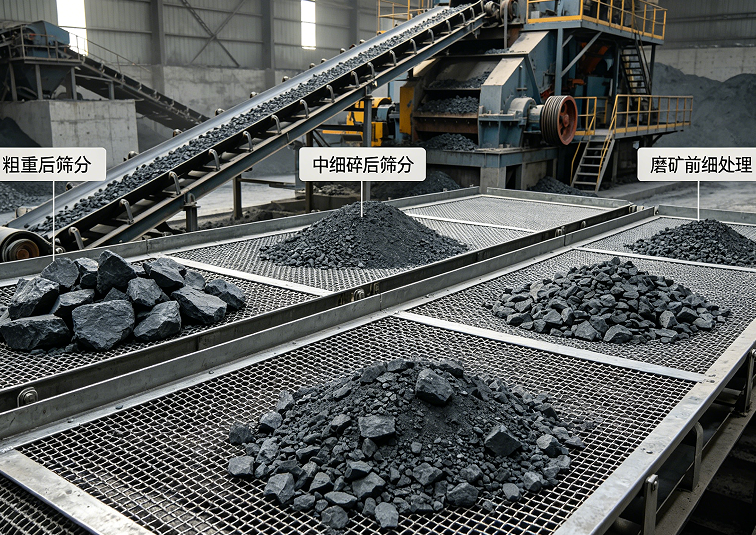
Coarse Screening Stage: Prioritize Metal Wire Mesh to Avoid Problems
In coarse screening stages such as initial crushing in mines and construction waste processing, you'll encounter large, hard rocks. In these situations, metal wire mesh is definitely the safest choice. Especially manganese steel wire mesh, after heat treatment, its hardness doubles, making it less prone to breakage even under high-frequency impacts from large materials. Its initial purchase cost is also low, and it can fully withstand the heavy loads of the coarse screening section, eliminating the need for frequent screen replacements.
Medium and Fine Screening and Wet/Adhesive Material Sections: Polyurethane Screens are the Worry-Free Choice
In medium and fine screening sections such as sand and gravel classification and coal washing dewatering, the materials are mostly small to medium-sized particles with significant moisture and high viscosity. In these cases, polyurethane screens are particularly worry-free. Their wear resistance is 3 to 5 times that of ordinary manganese steel, and their elastic surface allows stuck particles to automatically pop out, significantly reducing clogging rates and increasing screening efficiency by over 20%. They are also lightweight, allowing a single worker to complete installation and replacement without the need for additional hoisting equipment.
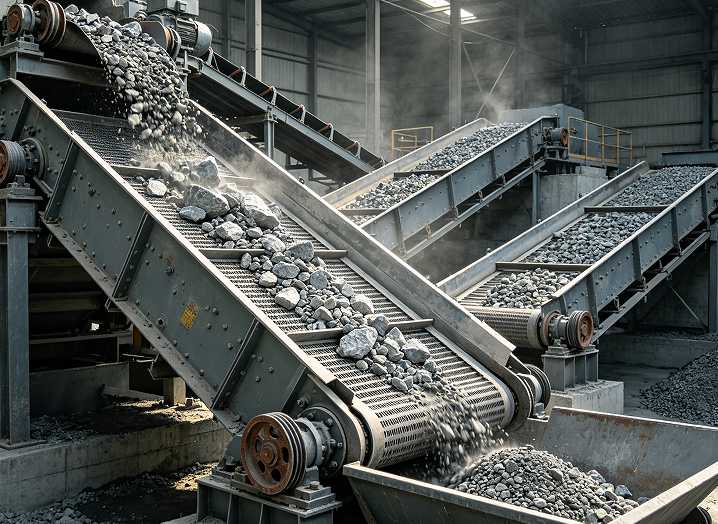
Environmentally Friendly and Corrosive Processes: Rubber Screens Offer Excellent Adaptability.If your screening section is located in a workshop with strict noise control, or handles acidic or alkaline corrosive chemicals, rubber screens are the optimal solution. It can reduce equipment operating noise effectively, eliminating the need for additional soundproof covers. It can also withstand the corrosion of most acidic and alkaline media. In scenarios such as green mines and chemical mineral processing, it can significantly reduce the overall cost of long-term operation and maintenance.
Leave a Message