

Wet screening and dry screening are two completely different screening methods; the screens used for each must not be interchanged. Selecting the wrong screen material or aperture shape not only compromises screening efficiency but also increases costs. Therefore, it is crucial to choose the appropriate screen for the specific material being processed.
Wet Screening: Water is a Friend, Not an Enemy
In coal washing, sand and gravel dewatering, or chemical slurry treatment, water is not a nuisance but a helper. It can wash away sticky particles and prevent clogging. In this case, which screen material should be chosen? Polyurethane screens are your best partner—they're not only acid and alkali resistant and corrosion resistant, but their elasticity also helps to "shake off" stuck fine mud. 316L stainless steel slotted screens are also commonly used in environments containing chloride ions, such as slag treatment after seawater desalination. As for screen aperture shape? Long, narrow apertures are the mainstream, and the long side should be perpendicular to the material flow direction so that water and fine powder can flow away instead of getting stuck in the aperture. Round apertures are also acceptable, especially suitable for precise classification of ultrafine particles, reducing agglomeration. However, square apertures should never be used, as they easily accumulate mud in wet environments, directly reducing efficiency by half.
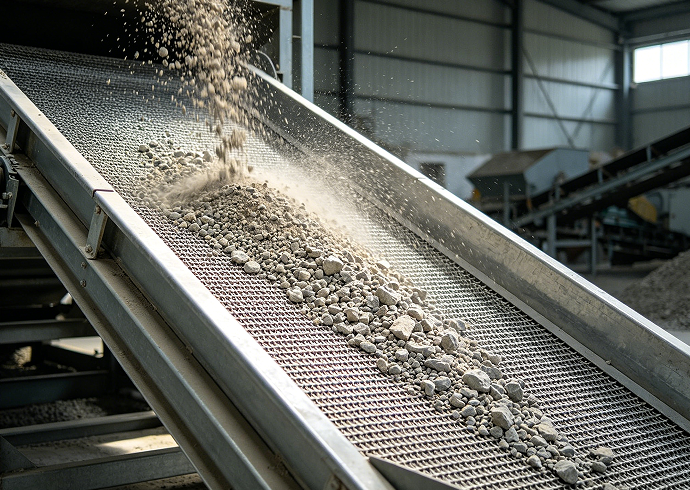
Dry Screening: Dust is the enemy, speed is key
In a dry screening environment, without water to clean the apertures, dust and hard particles become the screen's "sharpening stone." In this case, metal wire mesh, especially high-manganese steel or stainless steel woven mesh, is more suitable. Their high wear resistance and low cost make them suitable for classifying stone, plastics, and granular mineral powders. When choosing a screen mesh, avoid overly fine round holes, as they easily clog with dust. Square or rectangular holes are the real game-changers, offering high open area and large throughput, allowing for smoother material passage. Real-world testing in the US shows that rectangular holes are over 15% more efficient than round holes when dry screening crushed stone. Polyurethane screens are also increasingly common in dry screening, offering noise reduction, weight reduction, and impact resistance, making them ideal for sand and gravel plants near cities.
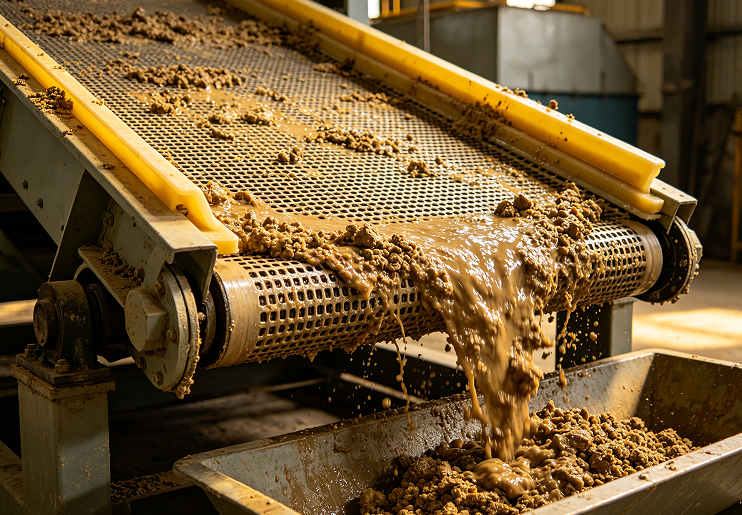
Choose a flexible mesh for heavy water, a stiff mesh for heavy dust, a long-hole mesh for flaky materials, and 316 stainless steel for acids and alkalis. Those who truly understand how to choose don't ask which is best, but rather focus on the material's condition. Don't be misled by so-called screen mesh counts, and don't blindly trust brands. The most important thing is to choose the most suitable mesh type and screen material based on the material's condition, as this directly affects the screen's lifespan and overall cost.
Leave a Message