

If you’ve ever bought a "heavy-duty" rubber screen panel only to watch it tear apart after a few weeks, you know the pain of a bad supplier. In the mining world, not all rubber is created equal. The difference between a panel that lasts and one that fails isn't just in the thickness of the rubber—it’s in the factory's manufacturing capabilities. When you're vetting a supplier, you need to look past the sales brochure and follow the process from formulation to vulcanization.
Formulation: It’s Not Just Black Rubber
If a supplier claims to use "the same rubber compound" for everything, it is a clear red flag. Reputable manufacturers of mining rubber screen panels maintain dedicated R&D teams. They understand that different mining operations have distinct material performance requirements; rubber formulations—such as specific ratios of natural rubber, styrene-butadiene rubber , and various additives—must be customized to meet specific screening needs. If a manufacturer cannot specify the polymer content or provide certified formulations, they are likely producing generic compounds, and quality cannot be guaranteed.
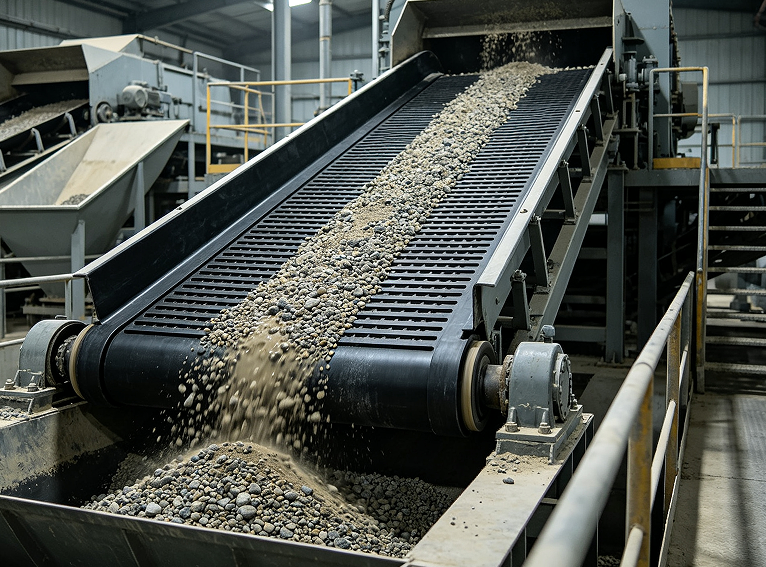
The Significance of the Vulcanization Process in Manufacturing Rubber Screens
Vulcanization is the critical process that transforms raw rubber into a high-performance product; when purchasing rubber screen panels, one should choose manufacturers that employ high-pressure, high-temperature molding techniques. This process ensures the rubber fills every corner of the mold uniformly, eliminating air bubbles and structural weak points. If a manufacturer cuts corners during this stage, the resulting screen panels may appear flawless on the surface while harboring internal voids, leading to failure under high-impact stress.
Quality Control: The Final Proof
Finally, a top-tier manufacturer treats quality control as a science, not a suggestion. They don't just eyeball the finished panel. They test the hardness (Shore A), measure tensile strength, and perform abrasion tests. They should be able to provide a mill certificate for every batch. If a factory can't guarantee the physical properties of the rubber they are shipping, you're taking a massive gamble with your plant's uptime.
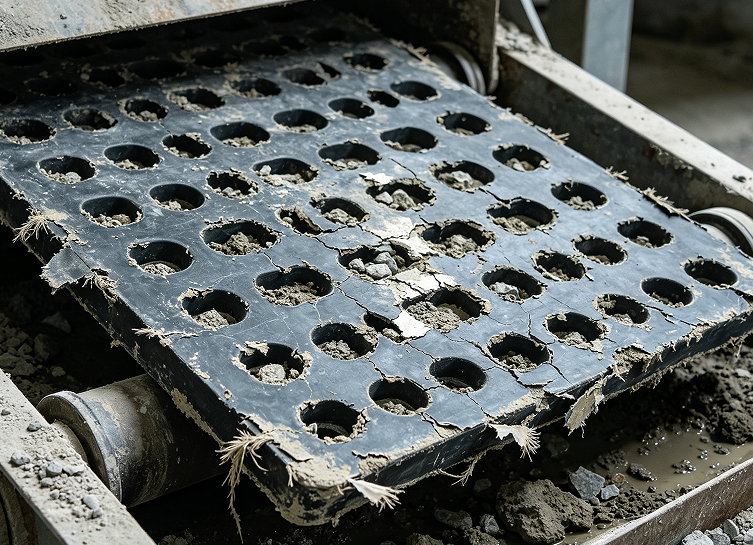
In short, assessing a factory’s capabilities means looking at their chemistry, their molding process, and their testing rigor. A true manufacturer controls the entire process from formulation to vulcanization, ensuring every mining rubber screen panel they produce is built to survive the pit. Don't buy the hype; buy the process.
Leave a Message