

Anyone who has performed dry screening operations knows just how grueling the work can be. The environment is extremely dry, and static electricity builds up intensely—to the point where one can feel their hair standing on end. Under such conditions, standard screens struggle to deliver effective results; they either suffer from aperture clogging due to static-induced dust adhesion or undergo rapid wear caused by the abrasive nature of the material. This is where rubber screen panels demonstrate their unique advantages in dry screening: they combine antistatic properties with high wear resistance—a combination that is difficult for synthetic materials to achieve.
Grounding the Charge: Natural Rubber’s Anti-Static Edge
The biggest headache in dry screening is static. When fine, dry particles rub against synthetic surfaces, they generate a massive electrostatic charge. This causes the material to stick to the screen deck, creating a sticky, blocked mess that brings production to a halt. Natural rubber has a hidden talent: it’s naturally more conductive than most synthetics. It doesn't allow electrons to build up and create that spark. By dissipating the charge, natural rubber screen panels prevent the fine dust from clinging to the surface, ensuring a free-flowing, unobstructed screening process even in the driest conditions.
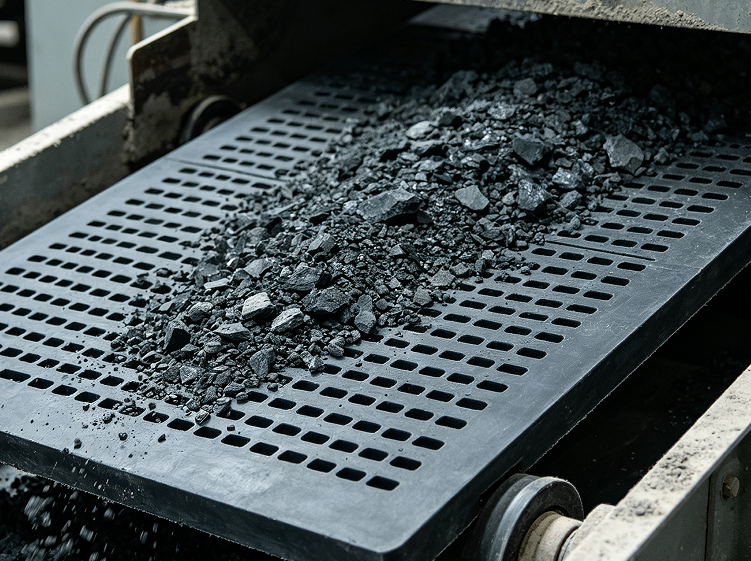
Natural Rubber Screen Panels Feature High Toughness and Resist Abrasive Wear
In an arid environment, the material you’re screening isn’t just dry; it’s often incredibly abrasive. Think sharp silica sand or gritty crushed stone. Many hard materials, like certain plastics or even steel, can actually heat up and degrade under this kind of friction. Natural rubber takes a different approach. Its molecular structure provides exceptional resilience. Instead of fighting the impact, it absorbs the energy and flexes. This prevents the surface from hardening and cracking, maintaining its toughness and delivering a longer service life in these high-friction scenarios.
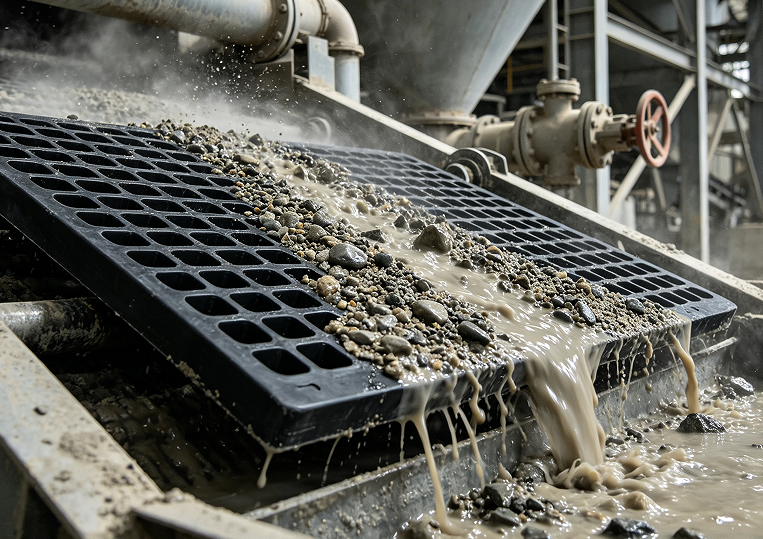
At the end of the day, choosing screen media for a dry screening operation is about managing friction and flow. Natural rubber screen panels handle the harsh realities of an arid climate by staying cool under pressure and letting the dust slide. They prevent the static buildup that chokes a system and resist the abrasive wear that destroys lesser materials. For any operation battling the dust bowl, natural rubber isn't just a choice—it's a necessity for reliable, uninterrupted production.
Leave a Message