

Although polyurethane screen panels are robust and durable, they are still susceptible to cracking. Once a crack appears, the issue goes far beyond mere aesthetics; under vibration, cracks can propagate rapidly, leading to panel failure and unplanned downtime. Understanding the causes of cracking and how to address them can save you thousands of dollars in replacement costs.
Primary Causes of Cracking
Most cracks stem from three main issues: First, over-tensioning. If clamping bolts are tightened excessively, the screen panel stretches beyond its elastic limit. The polyurethane material hardens and cracks, typically at the edges or near the bolt holes. Second, improper feed impact. Heavy rocks dropping directly onto a single point create stress concentrations. Over time, the material strength at that point diminishes, leading to cracks. Third, material mismatch. Using soft screen panels in high-impact zones is akin to driving a nail with a sponge; the material will tear due to fatigue. Environmental factors also play a significant role. Extreme cold makes polyurethane brittle, while UV exposure causes surface degradation; both accelerate the cracking process.
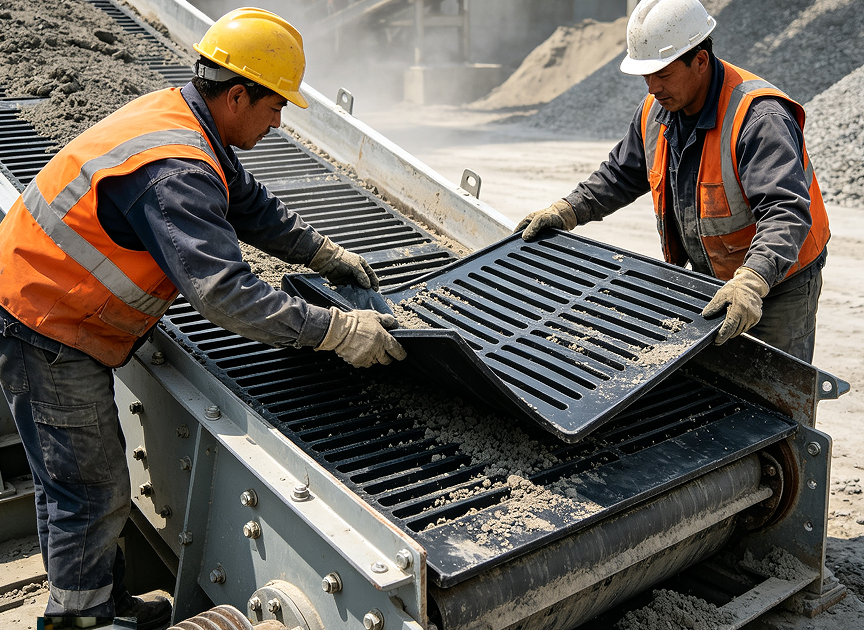
Repair Methods: Temporary and Permanent
For minor cracks, a two-component adhesive from a polyurethane-specific repair kit can extend the panel's service life. Thoroughly clean the damaged area, apply the adhesive, and allow it to cure completely before restarting the equipment. However, this is merely a temporary measure, as the repaired area often struggles to withstand intense vibration. If large cracks or structural damage occur, the panel should be replaced immediately. Continued use risks spreading cracks to adjacent panels or even damaging the screen frame structure. It is advisable to keep spare panels in stock for quick replacement.
Prevention Measures: Stopping Problems Before They Start
First, accurately control tension. Strictly adhere to the manufacturer's torque specifications for clamping bolts. Tightening should be done gradually and evenly—much like installing a drumhead. Second, optimize feed distribution. Install wear-resistant liners or feed deflectors in the feed box to ensure material is evenly distributed across the screen surface, thereby eliminating "hot spots" caused by concentrated impact. Third, match material selection to operating conditions: use high-hardness polyurethane screen panels in high-impact zones and softer panels for dewatering operations. Consult the manufacturer for specific recommendations tailored to your application. Fourth, conduct regular inspections; during weekly maintenance, look for early warning signs such as hairline cracks, edge wear, or loose bolts.
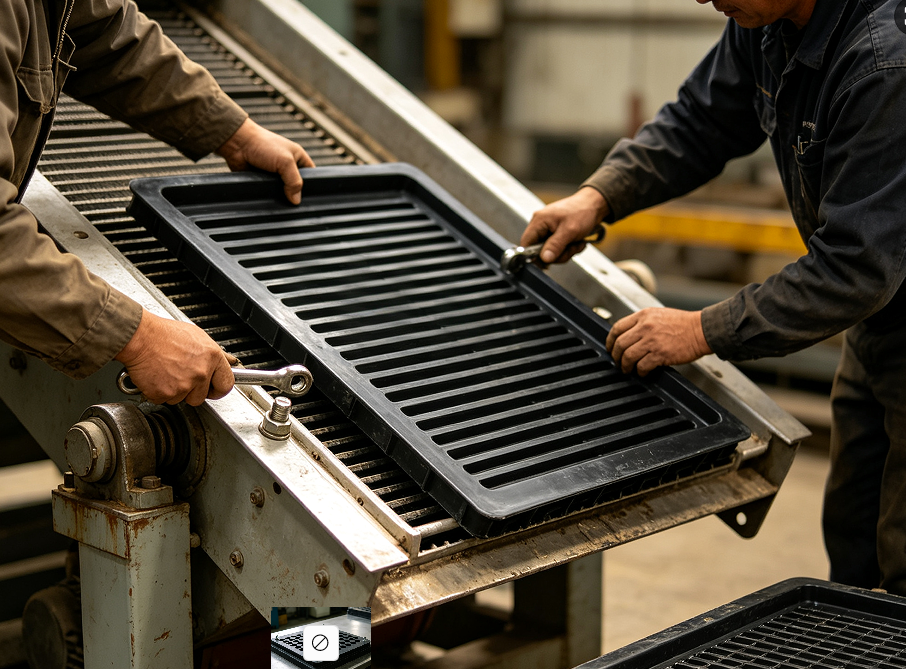
Cracking in polyurethane screen panels is not inevitable. Most failures stem from excessive tensioning, improper feeding methods, or mismatched material selection. The risk of cracking can be significantly reduced through correct tensioning, optimized feed distribution, and the selection of appropriately specified panels. Adopting a maintenance strategy of "prompt repair for minor damage and rapid replacement for severe cracks" not only extends the service life of the screen panels but also minimizes downtime.
Leave a Message