

If you’ve ever spent an entire shift scraping caked-on wet silt and sticky fine particles out of screen openings, you know screen clogging is the silent profit killer in wet fine-particle screening. For sand washing plants, coal washing lines and mineral processing sites, clogged screens kill throughput, mess up separation precision and force unplanned downtime that no operation can afford to waste. Polyurethane screen panels have emerged as the most reliable solution to this age-old pain point, completely changing how teams handle wet, sticky fine material day to day.
Tapered Aperture Design Stops Particles From Wedging
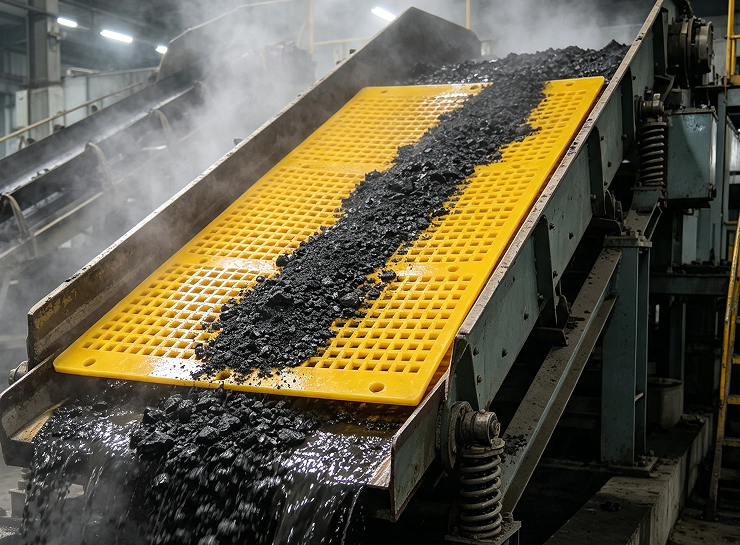
Unlike traditional woven steel wire screens that have uniform, straight-sided openings, most polyurethane screen panels are molded with a tapered opening that narrows at the top and widens toward the bottom. When wet fine particles fall through the deck, they never get wedged tight in the aperture the way they do in straight steel mesh holes. Even near-size particles that would normally get stuck in metal screens slide right through the tapered opening instead of lodging in place.
Flexible Material Creates Constant Self-Cleaning Action
Polyurethane’s natural elasticity is the secret weapon against screen clogging in wet fine-particle screening. When paired with standard vibrating screen motion, the slightly flexible polyurethane screen panels flex and bounce hundreds of times per minute. This tiny, continuous movement shakes loose any wet, sticky particles that try to cling to the screen surface, no manual scraping or high-pressure washing required. Even high-moisture clay and silt that coats steel screens in minutes can’t stick to the smooth, non-porous polyurethane surface.
Measurable Real-World Gains for Processing Sites
Actual data from silica sand washing plants shows that switching to polyurethane screen panels reduces the screen blinding rate by approximately half on average. One plant reported a significant increase in hourly throughput following the upgrade, alongside reductions in the time and labor costs associated with daily manual screen cleaning.
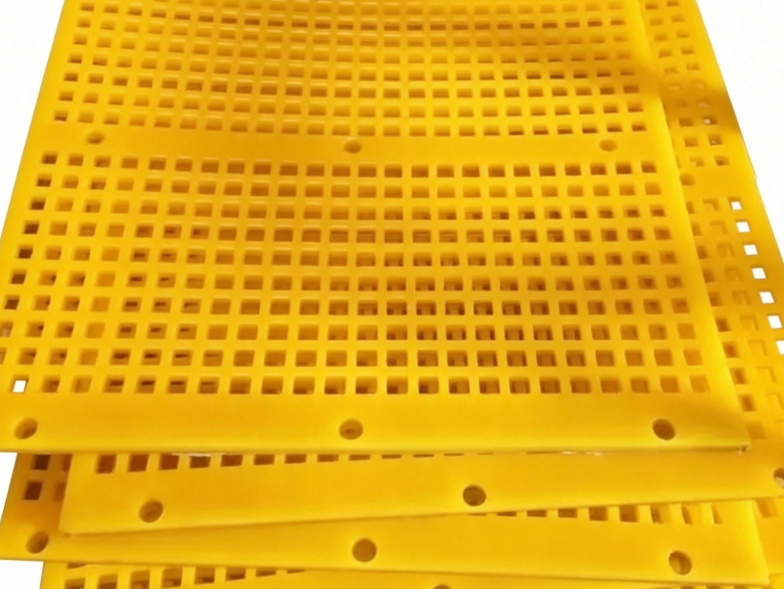
For operations involving the wet screening of fine particles, the benefits of polyurethane screen panels extend far beyond simply reducing blinding. They minimize unplanned downtime, improve output consistency, and eliminate the tedious, labor-intensive screen cleaning tasks that otherwise consume significant amounts of time.
Leave a Message