

If you have ever struggled with frequent screen blinding, uneven fine ore grading or short panel lifespan in your separation line, picking the right polyurethane screen for fine ore processing can make a far bigger difference than you expect. Unlike generic heavy-duty screens, fine ore separation demands precise material matching, targeted aperture design and proper installation to lock in stable efficiency.
Match Hardness Grade to Your Fine Ore Abrasiveness
The first rule to pick a qualified polyurethane screen for fine ore separation is aligning its Shore A hardness with your feed material properties. For low-abrasion fine particles like washed silica sand, 90A soft-grade panels work perfectly, as their flexibility resists blinding without wearing out too fast. For high-abrasion iron ore or mineral concentrate fines, 92A to 95A medium-hard grades strike the ideal balance between impact resistance and particle penetration speed. Skip the overly hard 98A panels for fine separation unless you run extreme high-impact pre-screening, as they tend to make near-size particles bounce instead of passing through smoothly.
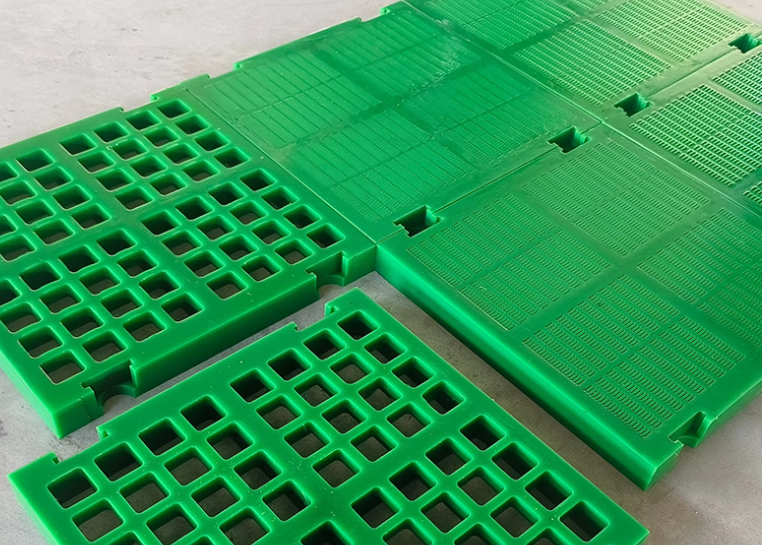
Pick Aperture Shape That Fits Your Target Cut Size
Aperture design is the most overlooked detail that directly decides your fine ore separation efficiency. For strict 0.1mm to 1mm cut sizes, precision-machined round apertures deliver the most consistent grading, preventing misplaced coarse particles from slipping into fine products. If you process damp fine ore that clogs easily, slotted rectangular apertures with the narrow side matching your target cut size will drastically reduce blinding, keeping your effective open area high through long continuous shifts. Always avoid generic off-the-shelf apertures that are 20% larger than your required cut, or you will end up with constant oversize contamination in your final fine ore.
Confirm Installation Style Matches Your Existing Deck
Even the best polyurethane screen for fine ore separation will underperform if it does not fit your deck properly. Most high-frequency fine separation decks use rail-type tensioned panels, which are lighter and easier to swap out during quick maintenance breaks. For heavy-load dewatering fine ore lines, modular 305x610mm bolt-down panels lock in full surface contact with the deck frame, eliminating partial sag that causes uneven material flow and premature edge wear. A mismatched installation style will create loose gaps that make panels bounce abnormally, cutting their service life by more than half.
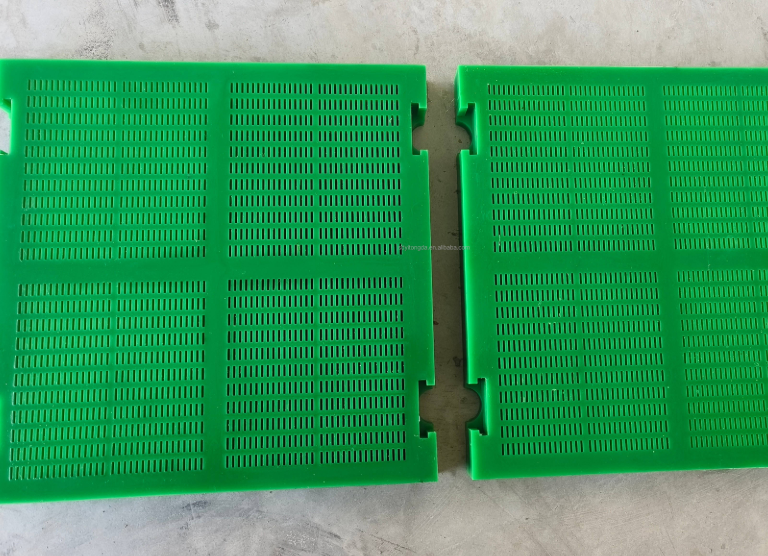
Selecting the right polyurethane screen panels for classifying fine ore is not actually complicated; the key lies in matching the appropriate hardness and aperture shape to the specific operating conditions and ensuring correct installation. If you frequently encounter issues such as aperture clogging or short service life during operation, it is worth paying close attention to these factors when selecting your polyurethane screen panels.
Leave a Message