

Choosing the right coating for steel grating isn’t just a box you check—it’s the difference between decades of hassle-free use and a never-ending cycle of repairs. Hot-dip galvanizing and epoxy spraying both claim to protect your investment, but they succeed in totally different ways. Honestly, it’s not about picking the “best” overall; it’s about choosing what fits your environment. Nail that, and you’ll barely think about your grating for years. Miss it, and you’re stuck with headaches and bills.
Hot-Dip Galvanizing: The Reliable All-Rounder
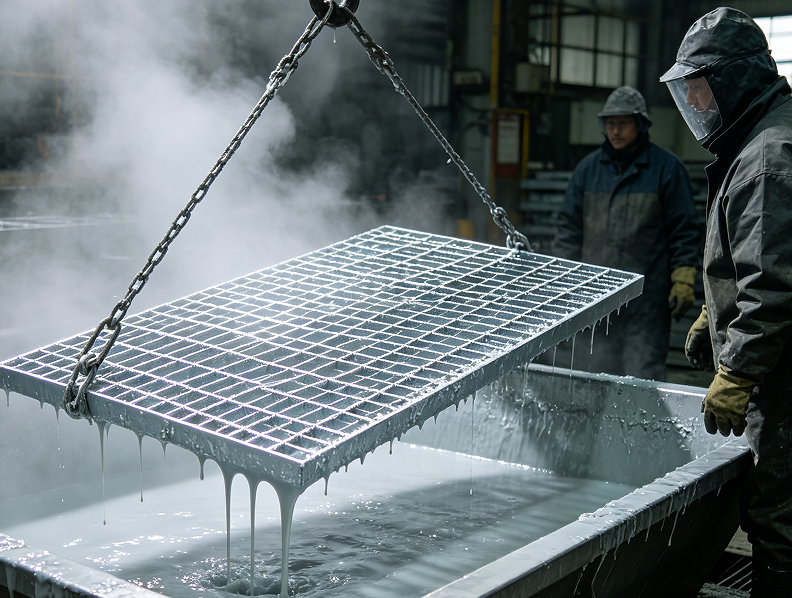
Hot-dip galvanizing sets the standard for general corrosion protection. Here’s how it works: you dunk the finished steel grating into molten zinc. That zinc forms a tough, sacrificial layer welded to the steel itself. When something scratches the surface, the zinc takes the hit and protects the metal underneath—a handy trick called cathodic protection. This coating shrugs off weather, sun, and rough treatment, so it shines outdoors and in most industrial spaces. With about 85 microns of zinc, you can count on years of life with little maintenance.
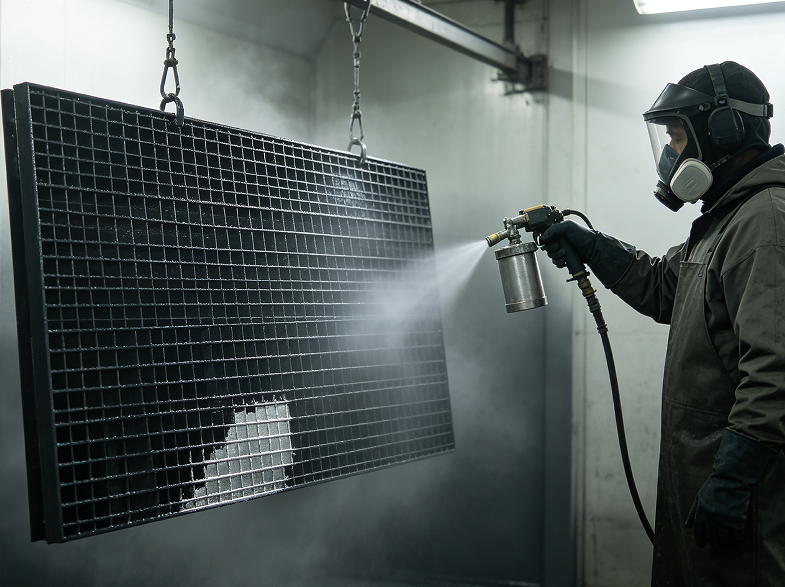
Epoxy Spraying: The Chemical Defender
If you’re fighting a constant chemical assault, epoxy spraying steps up. The sprayer lays down a thick resin shell that straight-up blocks acids, alkalis, solvents, and salt, such as chemical plants, wastewater facilities, or offshore rigs, the places where chemicals are always on the move. In these tough spots, a heavy epoxy outperforms galvanizing. But here’s the catch: if something breaks through the epoxy and reaches bare steel, rust can start sneaking underneath, sometimes without you noticing. When that happens, the whole steel grating panel might need work.
Breaking Down the Winner: Cost, Longevity, and Repairs
Let’s talk numbers. Hot-dip galvanizing usually costs less up front, especially when you’re running big batches. Epoxy spraying takes more effort—surface prep has to be spotless and the application has to be just right, so you’ll pay more for labor. In regular outdoor or factory settings, galvanizing can last anywhere from 20 to 50 years. Toss your steel grating into a pool of chemicals, and epoxy might need a refresh after 10 to 15 years. Fixing them is another story, spot-fixing a galvanized spot is simple with zinc-rich paint, but a bad spot on epoxy usually means you’re blasting and re-coating the whole panel.
So, which one should you use? There’s no universal answer. For most outdoor, heavy-use areas, hot-dip galvanizing is usually the smart pick because it puts up with so much. But for those nasty chemical zones, epoxy has your back. The best-run sites mix both, galvanized for general spaces and epoxy in the truly aggressive areas. That way, you get the most life out of your steel grating without paying for unnecessary repairs.
Leave a Message