

When you specify self-cleaning screens, most buyers focus on aperture size or material type and skip the crimp method entirely. That's a mistake. How you join the wires lock crimp and standard crimp, you need to changes everything about panel stiffness, vibration response, and long-term durability. One method flexes cleanly under load; the other loosens and invites blinding. For anyone serious about screening performance, this comparison isn't optional reading.
Standard Crimp: Simple But Limited
Standard crimp bends adjacent wires together at their crossover points, creating a basic mechanical lock. It's fast, cheap, and works fine for low-stress applications. Problem is, under the repeated impact of high-frequency vibration on self-cleaning screens, those bends fatigue and open up. Within weeks you'll notice wires shifting, apertures distorting, and fines creeping into gaps that weren't there at installation. It's the "good enough" choice that stops being good enough fast.
Lock Crimp: Built for the Long Haul
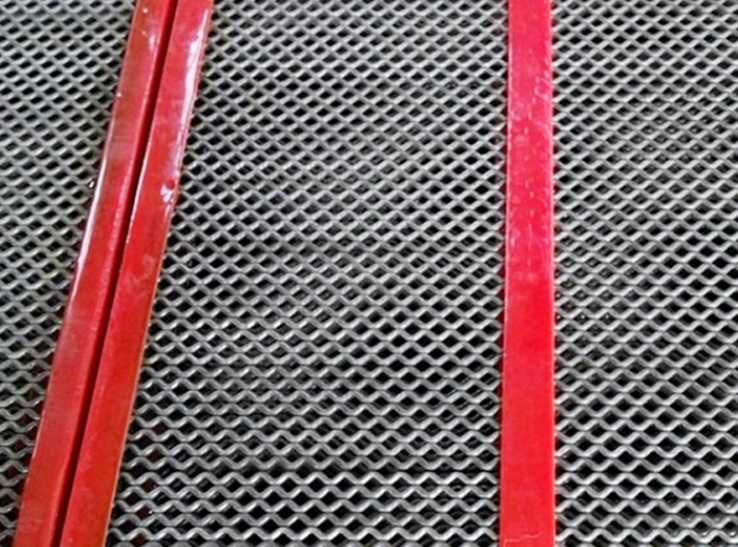
Lock crimp uses a secondary wire wrapped tightly through each crossover, essentially stitching the mesh together. The result is a rigid, stable panel that resists wire migration even under aggressive vibration. On self-cleaning screens handling abrasive or sticky feeds such as bauxite slurry, wet quartz sand and high-clay ores,locking crimp maintains aperture integrity months longer than standard. The trade-off? Slightly higher material cost and slower production, but the panel life difference usually pays for itself three times over.
What the Field Data Actually Shows
Operators who switched from standard to lock crimp on identical self-cleaning screen panels report 40–60% fewer panel replacements annually. Aperture consistency stays within 5% of original spec instead of drifting 15% or more. In high-vibration setups above 40Hz, standard crimp panels often fail at the wire joints before the mesh itself wears out, lock crimp design eliminates that weak point entirely.
Self-cleaning screens with lock crimp cost more upfront but run harder and longer. If your operation can't afford frequent panel swaps, it's the smarter call. Send us your screening conditions and we'll recommend the right crimp method for your setup.
Leave a Message