

In wet screening, poor water drainage and screen blinding are major challenges that reduce efficiency. Slotted-aperture polyurethane screen panels are engineered to excel in these areas, offering superior drainage and inherent anti-clogging effects for processing wet, sticky, or fine materials like coal, sand, and minerals.
Superior Drainage from High Open Area
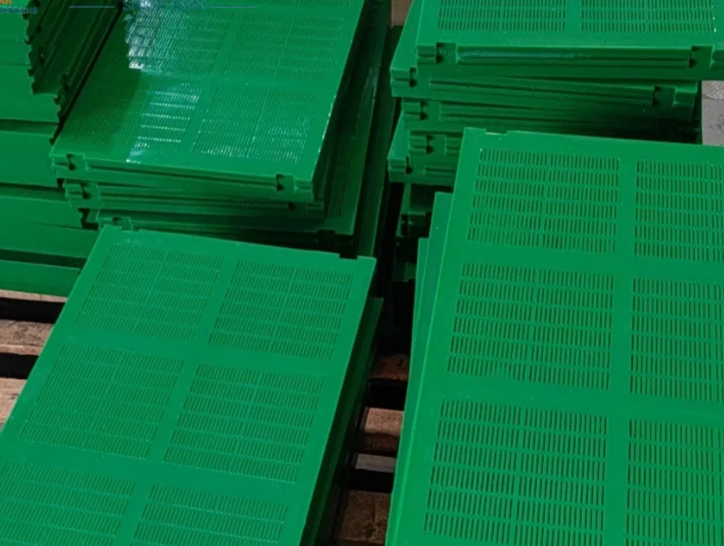
The key to excellent drainage lies in the slotted polyurethane panels. Compared to round or square holes of a similar size, the elongated rectangular shape provides a significantly larger total open area. This allows free water and fine particles to pass through the screen rapidly and efficiently, resulting in a drier product on the deck and reduced water carry-over, which improves overall separation efficiency.
Inherent Anti-Clogging Mechanism
The slotted shape polyurethane panel is central to its anti-clogging effects. The long, straight sides allow qualifying particles to pass through quickly, preventing buildup. Crucially, the design minimizes sharp corners where particles typically get trapped—a common issue with square holes. This promotes smooth material flow and is particularly effective for sticky or agglomerating materials.
Material Synergy: Polyurethane's Contribution
The polyurethane material itself enhances these benefits. Its non-stick, low-friction surface helps prevent fine particles from adhering. Additionally, slight flexibility of slotted polyurethane panels under material impact creates a micro-movement that, combined with screen vibration, acts as a "self-cleaning" mechanism to dislodge near-size particles, further preventing blinding.
Optimal Application and Selection
These slotted aperture polyurethane screens are best suited for dewatering sands, draining coal and scalping wet fines. For maximum effect, slots should be aligned with material flow, and the correct slot width must be chosen—too narrow leads to blinding, while too wide compromises sizing accuracy.

Slotted aperture polyurethane screen panels provide a targeted solution for wet and sticky screening challenges. By combining a high-open-area design with a clog-resistant geometry and favorable material properties, they deliver efficient drainage and reliable anti-clogging effects. Implementing them in appropriate circuits leads to drier products, higher throughput, and significantly reduced maintenance downtime.
Leave a Message