

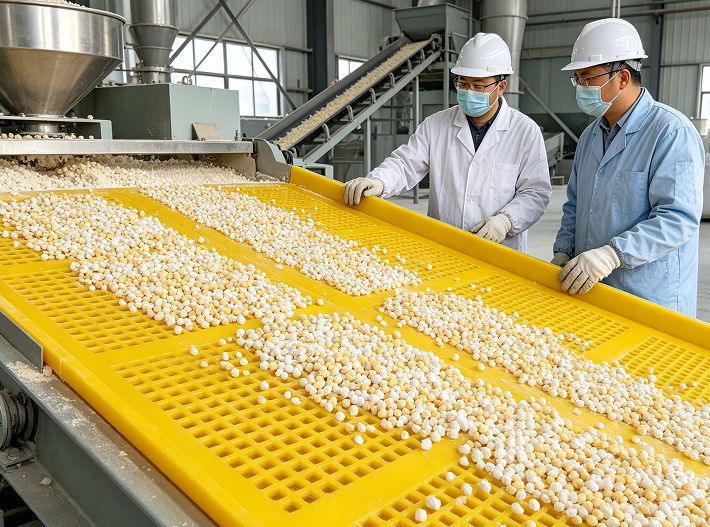
Screening potash fertilizer is challenging due to its hygroscopic, dusty nature, which causes rapid screen blinding. Polyurethane screens excel in this application not just for wear resistance, but for their specialized anti-fouling design tailored to potash fertilizer. These integrated features minimize adhesion, maintain open area, and ensure reliable, high-capacity separation.
The Potash Screening Challenge
Potash, especially potassium chloride, readily absorbs ambient moisture, creating a damp, sticky surface on particles. Processing generates fine dust that, combined with humidity, forms a pasty layer that clogs apertures. This fouling reduces efficiency and increases downtime. An effective anti-fouling design must combat adhesion, promote material release, and resist moisture.
Material: The First Line of Defense
Specially formulated polyurethane screen is the foundation. Key properties include a low-surface-energy, hydrophobic compound that creates a non-stick surface to prevent damp potash from adhering. The material is non-absorbent, so it doesn't swell or retain moisture. Anti-static additives can also be incorporated to dissipate the static charge that attracts fine dust.
Aperture Geometry and Surface Features
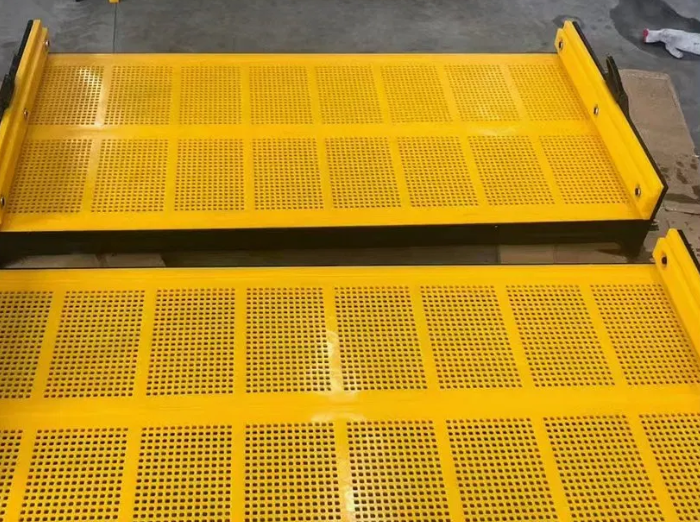
The physical design is crucial. Open-area-maximizing shapes of polyurethane panels like slotted or square apertures are preferred over round holes, as they offer fewer points for material to lodge. A critical feature is the tapered or "flared" aperture profile—wider on the discharge side than the feed side. This prevents near-size particles from getting wedged, allowing them to pop free with vibration. Textured or slightly crowned surfaces can also be used to encourage material to roll and break up static layers.
Flexibility and the Self-Cleaning Action
The inherent flexibility of polyurethane screens is a major anti-fouling asset. As the screen deck vibrates, the panels undergo micro-deformations. This constant, slight movement creates a dynamic "self-cleaning" effect, mechanically dislodging particles that begin to stick in the apertures or on the surface—an advantage rigid screens lack.
Efficient potash screening requires a system engineered for its specific challenges. Modern polyurethane screens provide this through a holistic anti-fouling design that combines a non-stick, hydrophobic material with optimized aperture geometry and leverages natural flexibility. This integrated approach minimizes blinding, maintains throughput and product quality, and extends service life, translating to higher availability and lower operating costs for potash producers.
Leave a Message