

If you operate in the mineral processing industry and still rely on traditional metal screens, you're essentially wasting money and efficiency. Let's explore why polyurethane screens have become the preferred solution for grading and dewatering in mining, coal, and metallurgical plants worldwide.
Why Polyurethane Screens Outperform Metal Screens
Polyurethane screens significantly outperform metal screens. Their wear resistance is four to five times that of steel screens, and field data shows their service life is two to three times longer than metal screens. Some operators even claim a service life 8 to 10 times that of standard metal screens, which is not impossible for high-performance polyurethane screens. So what's the secret to its superior performance? The key lies in the elastic recovery ability of polyurethane. When material impacts the screen surface, the material bends and rebounds without breaking. Combined with a 140° cone angle anti-clogging design, wet particles do not remain on the screen and clog the pores.
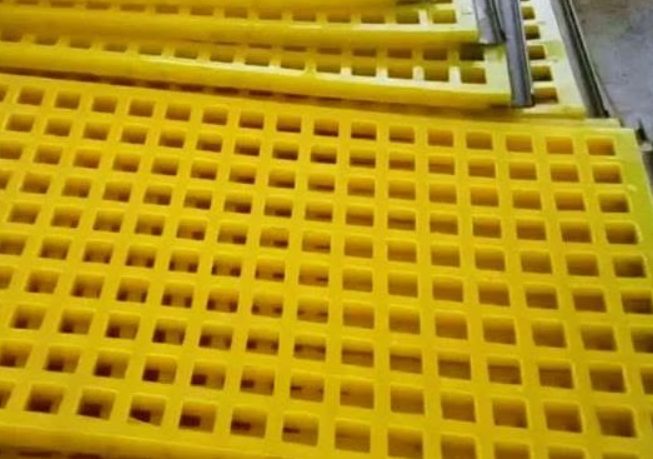
Parameters for Using Polyurethane sieves in Mineral Processing
For mineral processing, classification, and dewatering, the following parameters are crucial: screen arc lengths are available in 800mm, 1200mm, and 1600mm; aperture range is 0.1mm – 170mm; screen hardness should be between 85A and 95A; and the temperature during dewatering should be controlled between -40°C and 80°C. If maximum drainage is required without height restrictions, a 1200mm arc length is the optimal choice.
Advantages of Polyurethane Screen in Classification and Dewatering
When using polyurethane screens for dewatering, the slurry flows through the curved surface of the bend, with the liquid flowing downwards and the solid material moving downwards under gravity. Therefore, polyurethane screens are ideal for media recovery, desliming, and impurity removal. During classification, the stable cutting point allows for thorough separation of fine particles, and in many cases, downstream recovery rates can be increased by 20-30%.
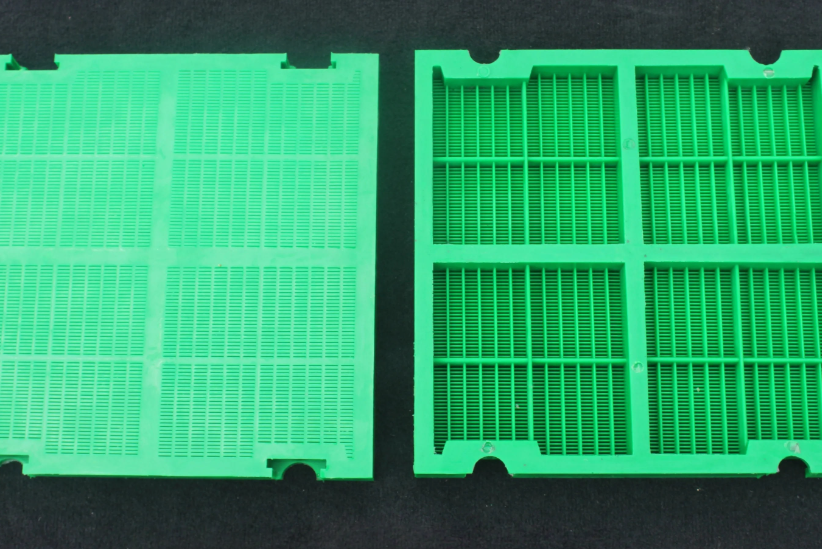
The mining industry accounts for approximately 58% of global demand, the coal industry 32%, and the metallurgical industry 17%. It's clear that the entire industry is shifting towards using polyurethane materials in its operations. If your grading or dewatering stages are performing poorly, the problem may not be with your process, but rather with the selection of the polyurethane screens.
Leave a Message