

The foundational quality and performance of any woven metal screen are determined long before it reaches the weaving loom; they are forged in the very wire from which it is made. While alloy composition is critical, the manufacturing process of the wire itself plays an equally decisive role. Cold-drawing, a precise metalworking technique, imparts a unique set of enhanced mechanical properties to steel wire, making it the preferred choice for manufacturing high-performance, durable woven metal screens that must withstand the extreme demands of industrial screening.
Enhanced Tensile Strength and Yield Point
The cold-drawing process involves pulling annealed steel wire through a series of progressively smaller dies at room temperature. This severe plastic deformation causes the metal's grain structure to elongate and align in the direction of the draw. The primary mechanical benefit is a significant increase in both tensile strength and yield strength. For woven metal screens, this translates directly to a wire that can withstand greater tensioning forces without permanent deformation or stretching. A screen made from cold-drawn wire maintains its precise mesh openings and dimensional stability under heavy load, crucial for consistent separation accuracy and preventing premature failure from sagging or “bagging.”
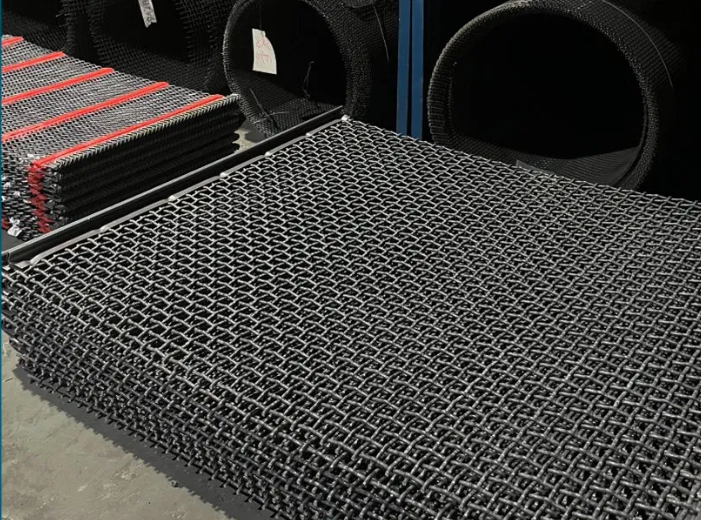
Superior Surface Hardness and Wear Resistance
As the wire is cold-worked, its surface undergoes work hardening, resulting in increased hardness. A harder wire surface provides superior resistance to abrasive wear, which is the primary failure mode for woven metal screens processing minerals, aggregates, or other abrasive materials. This inherent hardness reduces the rate of material loss at the wire’s surface, directly extending the screen’s operational life. The smooth, work-hardened surface finish achieved through drawing also offers some resistance to material adhesion or blinding, as fine particles have fewer microscopic irregularities to cling to compared to a rougher, hot-rolled surface.
Improved Fatigue Resistance and Dimensional Consistency
The aligned grain structure and elimination of micro-voids during cold drawing contribute to improved fatigue resistance. In the dynamic, high-vibration environment of a screening machine, woven metal screens are subjected to millions of cyclic stress cycles. Cold-drawn wire is better equipped to resist the initiation and propagation of fatigue cracks, leading to a longer service life under these demanding conditions. Furthermore, the cold-drawing process produces wire with exceptional dimensional accuracy and consistency in diameter. This uniformity is vital for weaving woven metal screens with precise, consistent mesh openings, ensuring predictable and repeatable screening performance across every panel.
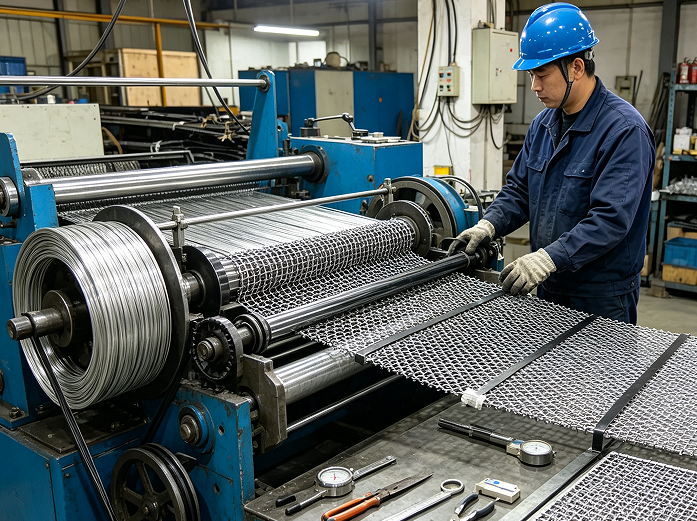
Choosing woven metal screens manufactured from cold-drawn steel wire is an investment in fundamental mechanical superiority. The process delivers a wire that is stronger, harder, more fatigue-resistant, and dimensionally precise. These inherent advantages translate directly into screens that offer longer service life, more stable screening performance, and ultimately, a lower total cost of ownership by reducing replacement frequency and maintenance downtime in your most challenging screening applications.
Leave a Message